
What is Vedic Art?
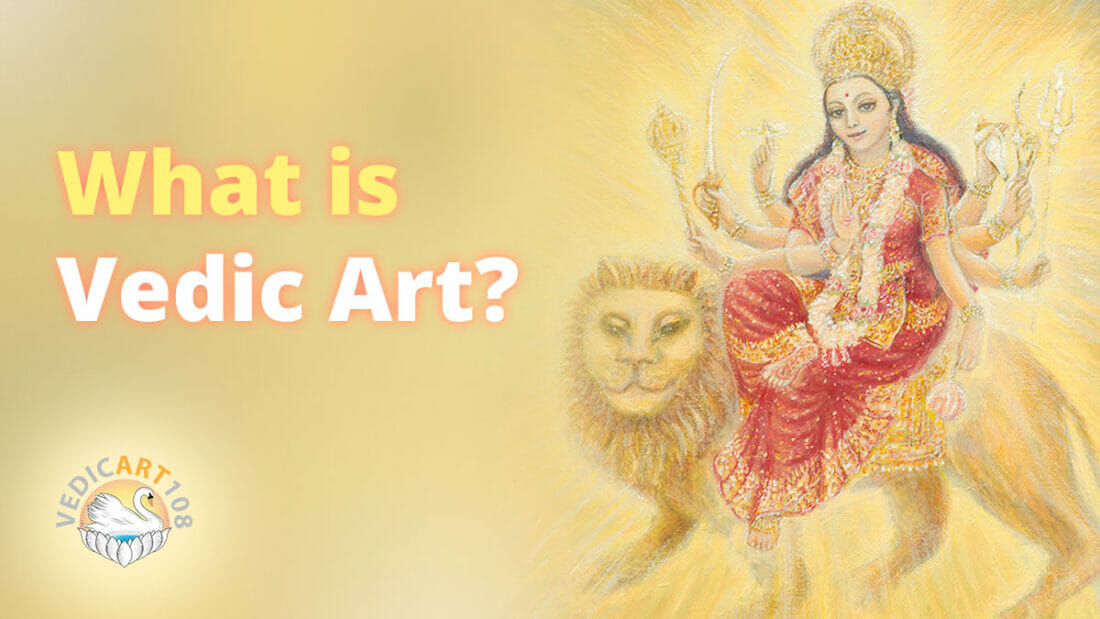
Vedic art is art that expresses the knowledge of the Veda, India’s oldest body of knowledge, in visual form. Its subjects are the devatas, the aspects of Natural Law described in the Vedic texts, and the masters of the Vedic Tradition, such as Guru Dev and Maharishi Mahesh Yogi. It is created from, and invites, a settled and expanded state of awareness.
- Vedic comes from Veda, the Sanskrit word for “knowledge”.
- Vedic art depicts the devatas and the masters of the Vedic Tradition: Guru Dev and Maharishi Mahesh Yogi.
- It is closely connected with the Transcendental Meditation technique: art that comes from a quiet, settled mind.
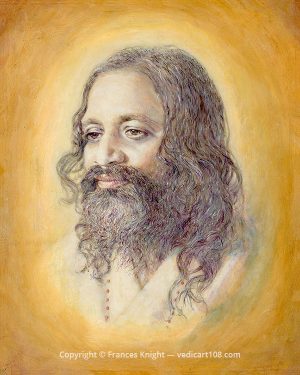
- Artist Frances Knight painted Guru Dev for over 35 years under Maharishi’s direction and guidance.
What does “Vedic” mean?
The word Vedic comes from the Sanskrit word Veda, which means “knowledge”. The Vedas are the oldest sacred texts of India. They cover a wide range of knowledge, from hymns and rituals to philosophical teachings. Vedic art draws on this knowledge and seeks to express, in colour and form, the deeper truths and principles it describes.
What does Vedic art depict?
 Vedic art has two main subjects.
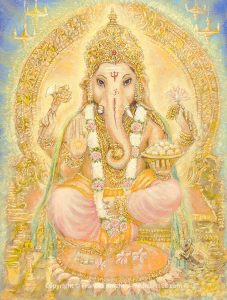
The devatas. In the Vedic texts, the devatas are the aspects of Natural Law that govern and sustain life. Each is depicted with its own form, colour and qualities. Kartikeya, for example, is the Commander-in-Chief of the Devatas: the aspect of Natural Law that takes the lead to overcome any opposition to evolution. Ganga Devi is the personification of the Ganges, India’s most sacred river, and Lalita embodies beauty, grace and benevolence. Frances Knight’s devata paintings also include Durga, Ganesh, Hanuman, Lakshmi and Saraswati.
The masters of the Vedic Tradition. The Holy Tradition is the line of Vedic masters who have passed down the wisdom of integrated life from teacher to student, generation after generation. Vedic art portrays these masters, above all Guru Dev and his disciple Maharishi Mahesh Yogi.
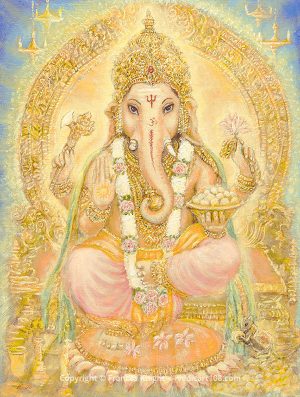
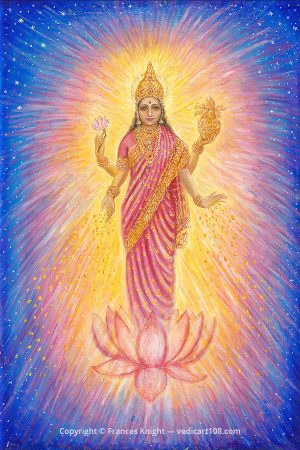
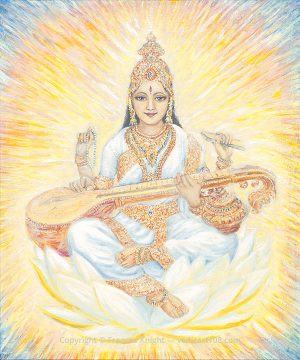
Nine devatas, painted by Frances Knight
Archival prints on matte paper and canvas, each with a certificate of authenticity signed by the artist.
How did Maharishi Mahesh Yogi and Guru Dev shape Vedic art?
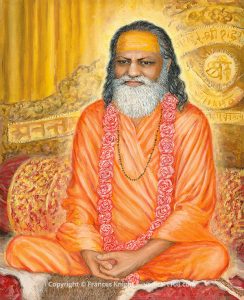 Swami Brahmananda Saraswati, known as Guru Dev, was Maharishi’s teacher, and stands closest to Maharishi in the Vedic Tradition of Masters. He was a renowned custodian of Vedic wisdom. His teaching that pure consciousness underlies and connects all things is the philosophical foundation of Vedic art.
Maharishi Mahesh Yogi, the founder of the Transcendental Meditation (TM) technique, brought this knowledge to the modern world. He emphasized that true creativity comes from a quiet, settled mind. Maharishi also guided how Guru Dev should be depicted and how Vedic Knowledge can be expressed in visual form. Frances Knight worked directly with him on these paintings for many years.
How is Vedic art connected to Transcendental Meditation?
Vedic art and Transcendental Meditation go together. Through TM, an artist experiences the quieter, deeper levels of the mind, where creativity has its source, and that settled awareness is reflected in the work. Artists who wish to create in this way are encouraged to practise Transcendental Meditation and to immerse themselves in Vedic knowledge, letting it guide their creative process.
How do people experience Vedic art?
Vedic art is not bound by strict rules or techniques. It is defined by its source and its subject. For the artist, painting becomes a meditative practice. For the viewer, a Vedic painting can bring a feeling of quiet and uplift, a glimpse of deeper awareness.
Who is Frances Knight?
Frances Knight studied painting at Camberwell School of Art in London, then won a Commonwealth scholarship for an MFA in India, graduating with a First. She spent over 35 years creating paintings of Guru Dev under the direction, guidance and inspiration of Maharishi Mahesh Yogi. She began her painting of the Holy Tradition in 1972. Her paintings carry what Maharishi taught her about how Guru Dev should be portrayed and how Vedic Knowledge can be expressed visually.
Frances contributes 20% of the net proceeds from her prints to support the Maharishi Vedic Pandits in India.
Frequently asked questions
What is Vedic art, in one sentence?
Vedic art is art that expresses the knowledge of the Veda in visual form, depicting the devatas and the masters of the Vedic Tradition.
What are devatas?
In the Vedic texts, devatas are the aspects of Natural Law that govern and sustain life. In Vedic art each devata, such as Ganesh, Lakshmi or Saraswati, is depicted with its own form, colour and qualities.
Who was Guru Dev?
Guru Dev, Swami Brahmananda Saraswati, was the teacher of Maharishi Mahesh Yogi. He stands closest to Maharishi in the Vedic Tradition of Masters.
Do I need to practise Transcendental Meditation to appreciate Vedic art?
No. Anyone can appreciate Vedic art. Artists who create in this tradition are encouraged to practise Transcendental Meditation, because the art comes from a quiet, settled mind.
Where can I buy prints of Vedic paintings?
Frances Knight’s Vedic paintings are available as archival prints on matte paper and, for most paintings, canvas. Each print comes with a certificate of authenticity signed by the artist, and prints ship worldwide.
Bring a Vedic painting home
Nineteen paintings of the devatas, Guru Dev and Maharishi Mahesh Yogi, printed on archival paper and canvas.